How Do You Control Moisture in a Crawl Space?
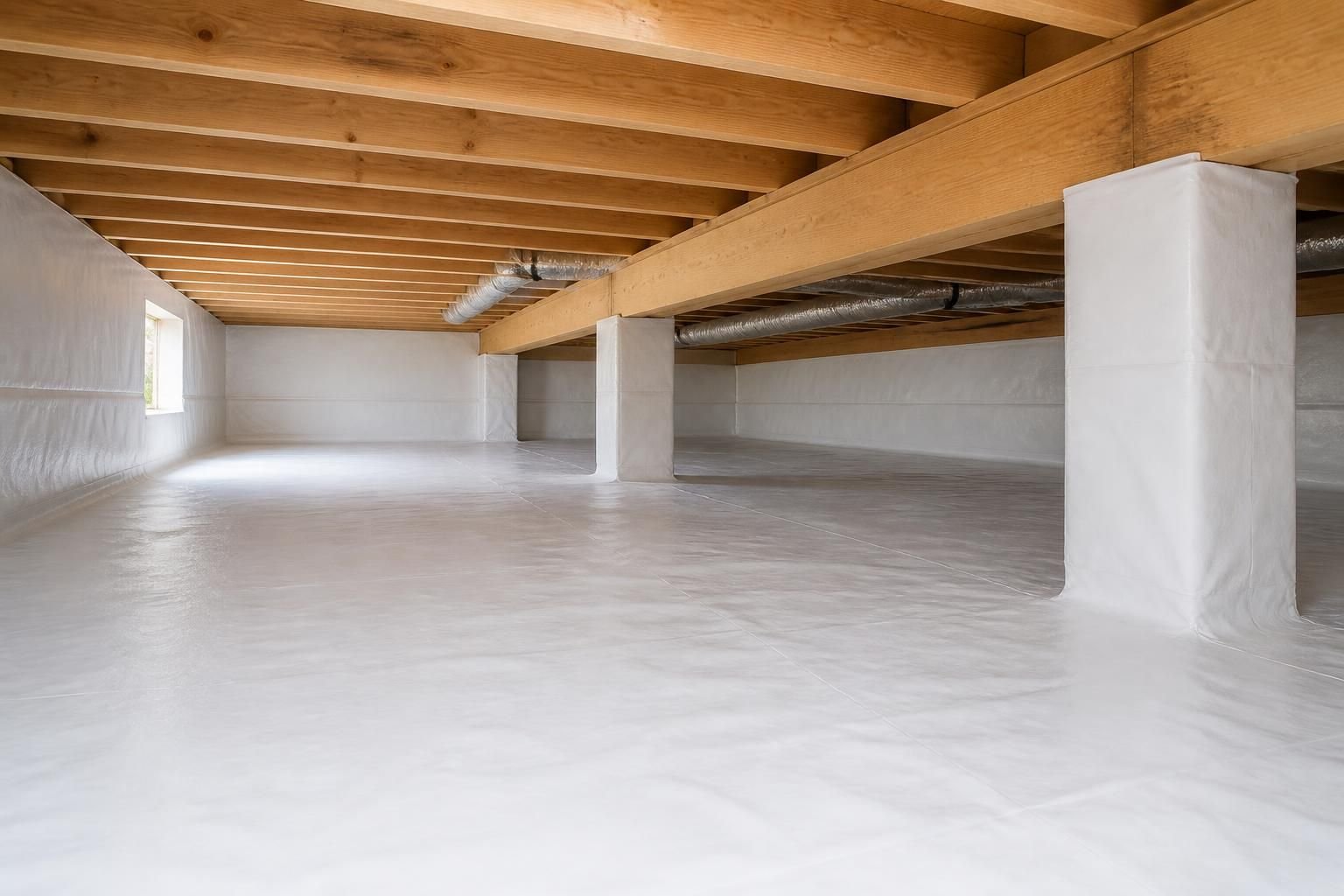
Short answer: Moisture control usually requires a sequence: identify the source, correct water movement, cover exposed soil, seal air leaks and vents, review insulation and…
Our Blog
Short answer: Moisture control usually requires a sequence: identify the source, correct water movement, cover exposed soil, seal air leaks and vents, review insulation and…
Short answer: A crawl space may need a dehumidifier when humidity remains high after vapor control and air sealing, when the home has duct condensation,…
Short answer: Most dirt-floor crawl spaces benefit from a vapor barrier because exposed soil releases moisture into the crawl space. The liner should cover the…
Short answer: Crawl space moisture can contribute to wood rot when joists, beams, sill plates, subflooring, or supports stay damp for long periods. Encapsulation can…
Short answer: Crawl space moisture can contribute to sagging floors when damp conditions affect joists, beams, subflooring, sill plates, or supports over time. It can…
Get Started
Share what you have noticed in your crawl space, and we will help you understand the next best step for moisture control, repairs, or encapsulation work.