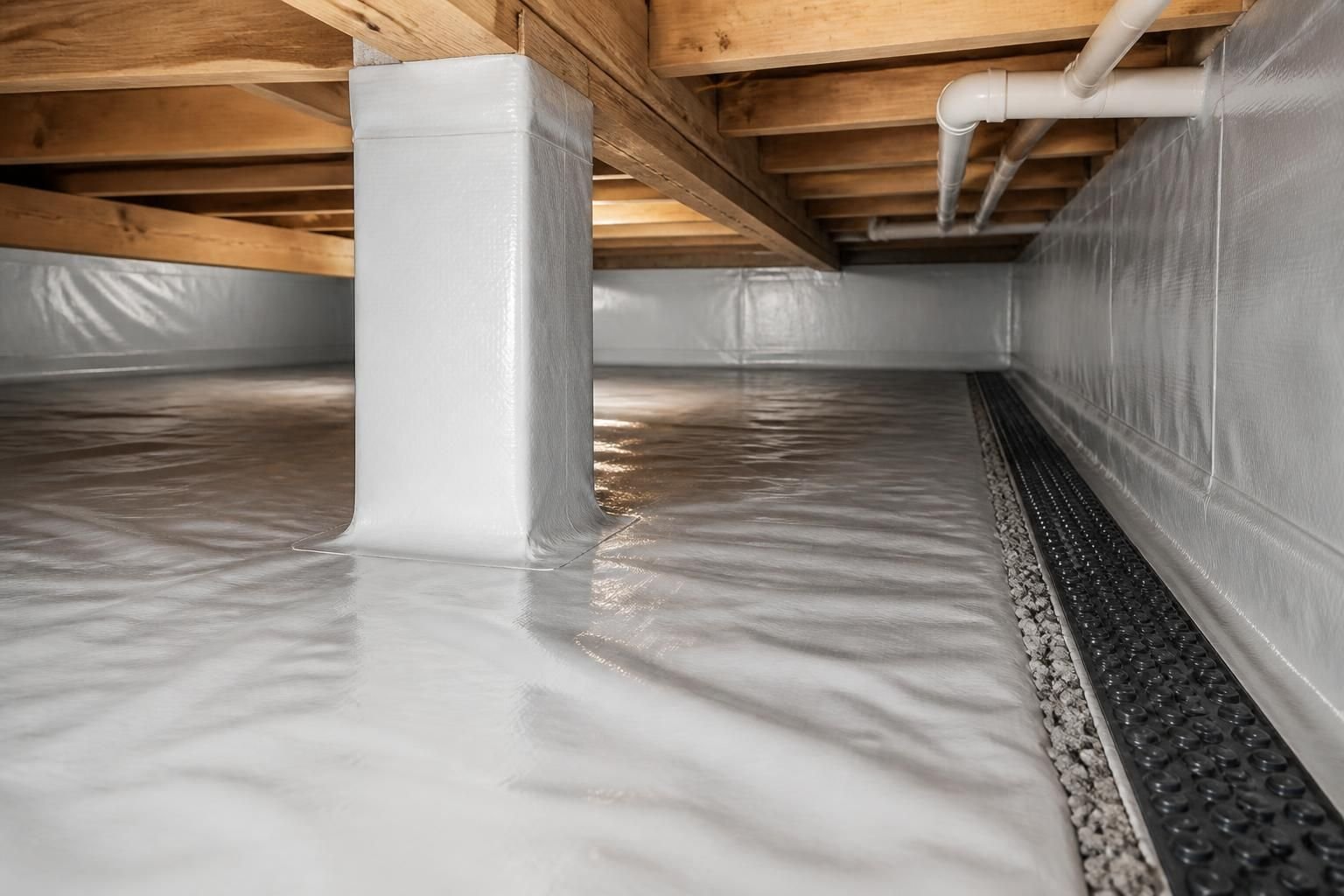
Catawba Crawlspace Co. provides crawl space waterproofing in Charlotte, NC for homeowners dealing with water entry, wet soil, recurring dampness, or water that collects below the home. Waterproofing is selected after inspection to address how water reaches the crawl space and what moisture-control measures belong with it.
Call +17042766624 to schedule an inspection and discuss water-control options for your crawl space.
Waterproofing addresses water-entry and drainage-related conditions affecting the crawl space. It is different from a vapor barrier, which helps limit moisture vapor rising from exposed soil, and different from a dehumidifier, which manages air moisture. More than one measure may be appropriate when inspection finds multiple moisture sources.
We inspect visible water paths, damp soil, accessible foundation-area conditions, drainage concerns, openings, existing liner material, insulation, and water-related damage. The goal is to identify whether active water entry is present and whether water control should come before barrier, repair, or dehumidification work.
A vapor barrier can be part of encapsulation because it limits ground vapor. Waterproofing addresses water movement and entry. When appropriate, the crawlspace encapsulation plan may also include sealing, liner installation, dehumidification, insulation work, mold removal, or repairs. Inspection determines the sequence.
An inspection should distinguish water entering through or below the crawl space from exterior runoff, short downspouts, grading conditions, plumbing leaks, and isolated condensation. Catawba's crawl-space scope can address approved waterproofing and drainage work, but a plumber, gutter contractor, grading contractor, foundation specialist, or another qualified trade may be needed when the source falls outside that scope.
Catawba does not offer sump-pump installation. The written proposal should identify the observed water path, the drainage or waterproofing work included, any excluded exterior or plumbing correction, and what the homeowner should monitor after heavy rain.
We evaluate water and moisture conditions in the accessible crawl space.
We explain the observed water path and related conditions.
We determine whether barrier, sealing, repair, or humidity control should be paired with waterproofing.
We explain what was addressed and what to monitor.
Ongoing water can affect insulation, wood framing, barrier material, and the floor system above. Damp conditions can contribute to musty odor, mold-related conditions, pest access through openings, indoor comfort concerns, and reduced insulation performance. These are reasons to inspect the crawl space, not guarantees of conditions in every home.
After water-control work, monitor the crawl space for new water, changed odor, wet insulation, condensation, damage to liner materials, and blocked or altered water paths. Contact us if the observed conditions return.
No. They address different moisture pathways and may be used together when appropriate.
No. A dehumidifier manages air moisture, not active water movement.
Schedule an inspection so the water path and related conditions can be evaluated.
Controlling water exposure can support the condition of nearby materials.
No. The service plan depends on the inspection findings.
New water, odor, condensation, damaged liner material, and wet insulation are useful signs to report.
A typical 2026 planning range is $1,500–$7,000. The water source, drainage route, foundation conditions, access, and related preparation affect the scope. See the Charlotte crawl-space pricing guide and request an inspection for a written scope.
Call +17042766624 to schedule a crawl space waterproofing inspection with Catawba Crawlspace Co. in Charlotte, NC.
Get Started
Share what you have noticed in your crawl space, and we will help you understand the next best step for moisture control, repairs, or encapsulation work.