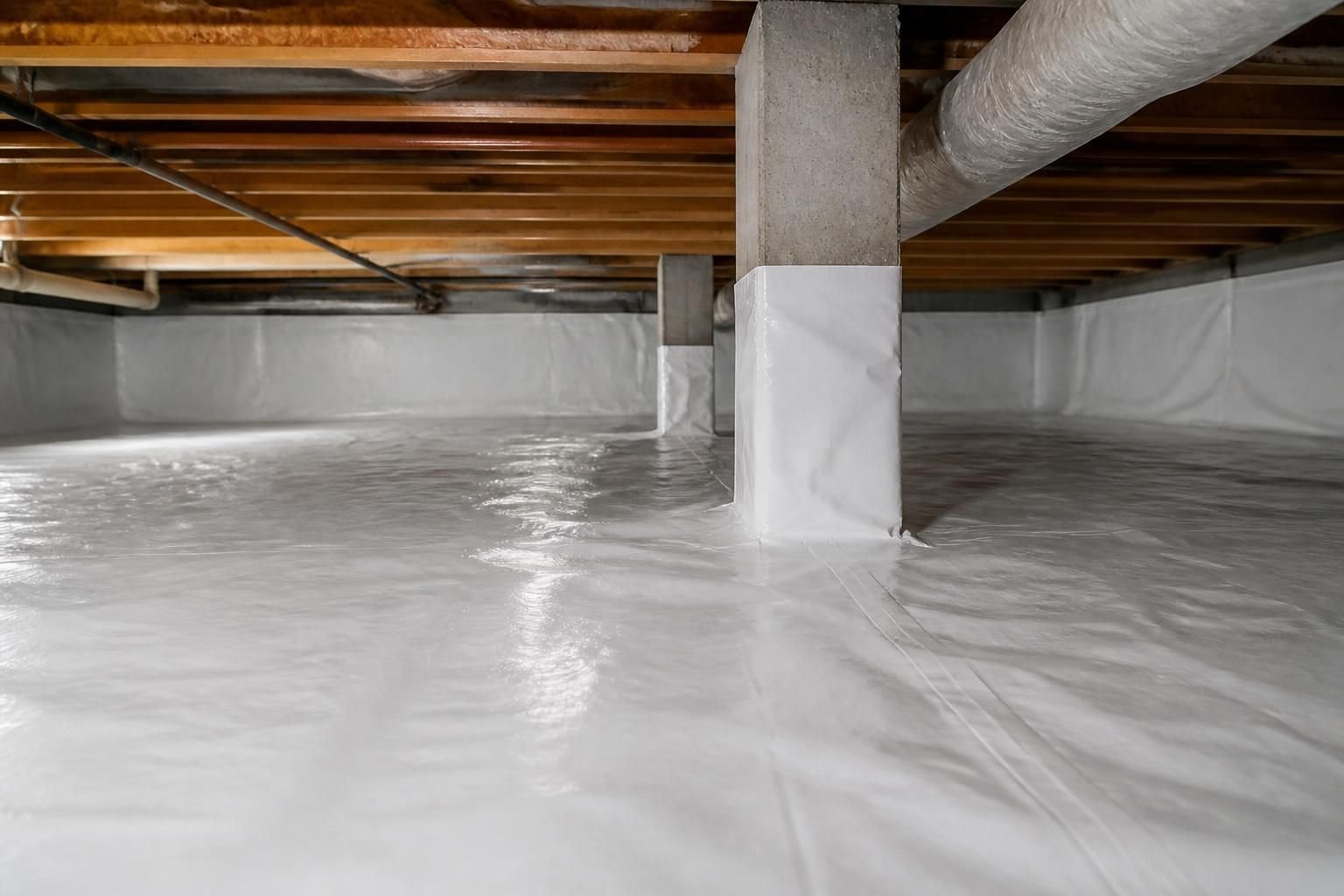
Catawba Crawlspace Co. provides vapor barrier installation in Charlotte, NC for homeowners with exposed soil, damp crawl space air, musty odor, or insulation and wood affected by moisture. A barrier is selected after inspection so it addresses ground vapor as part of the actual moisture-control plan.
Contact us to inspect the crawl space and determine whether vapor barrier installation is the right next step.
A vapor barrier, sometimes called a crawl space liner, creates a layer between exposed ground and the crawl space. It helps reduce moisture vapor rising from the soil into the air below the home. It is not a cure for every moisture problem, particularly active water entry or unaddressed openings.
We look at ground conditions, visible water paths, drainage concerns, openings, access, existing barrier coverage, insulation, and visible damage. This evaluation matters because a liner manages vapor from the ground, while water entering the crawl space may require waterproofing or drainage work first or alongside the barrier.
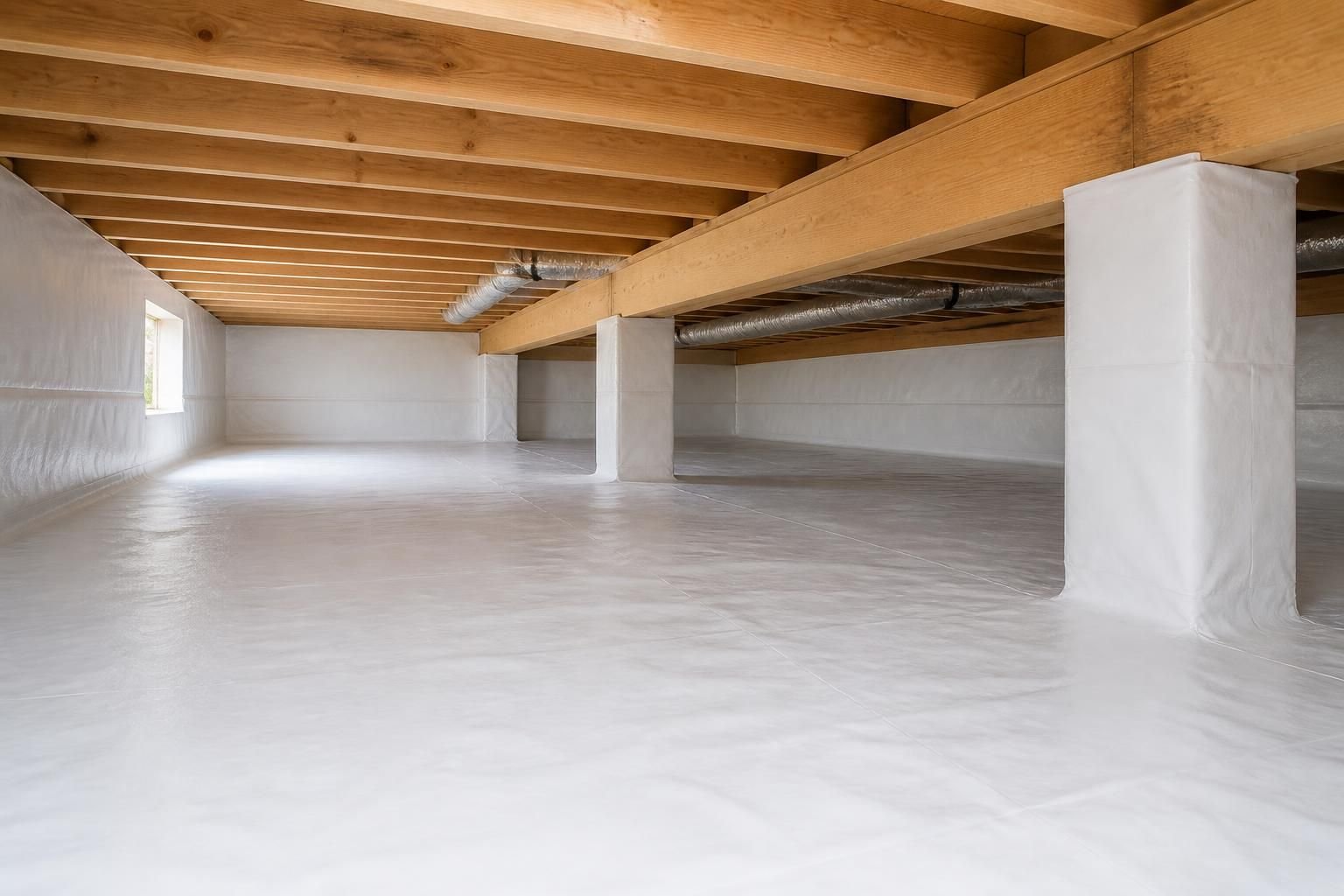
Vapor barrier installation is a central component of crawlspace encapsulation, but it is not the whole system. When appropriate, encapsulation can also include sealing outside-air and moisture entry points, dehumidification, insulation work, repairs, and water-control measures. Each component is selected for a condition that inspection identifies.
We identify moisture sources and material conditions that affect the installation.
We address conditions that would interfere with effective coverage.
The barrier is fitted across the crawl space floor and around accessible features as the project requires.
We explain what was installed and which conditions to monitor.
If water collects beneath the home, crawl space waterproofing or drainage correction may be the priority. If humidity persists after ground moisture and openings are addressed, crawl space dehumidifier installation may be appropriate. Wet insulation, damaged wood, or visible mold-related conditions may lead to insulation, repair, or mold removal services.
After installation, keep an eye on new water, torn or shifted liner material, unsealed access points, condensation, odor, and damaged insulation. A barrier helps reduce ground vapor, but ongoing water entry should be evaluated rather than covered over.
It helps control ground vapor. Active water entry and drainage issues may need separate waterproofing work.
It may help when ground moisture is contributing to damp conditions, after the crawl space is evaluated.
No. The installation depends on the accessible space and the conditions found.
Yes. A barrier can reduce ground vapor while a dehumidifier manages excess humidity when it is needed.
Insulation should be inspected because it may need related service before or with the barrier work.
A professional crawl space inspection identifies whether ground vapor is part of the moisture problem.
A typical 2026 planning range is $1,000–$4,000. Coverage, liner type, seams, walls, piers, penetrations, removal, and preparation affect the scope. See the Charlotte crawl-space pricing guide and request an inspection for a written scope.
Call +17042766624 to schedule an inspection and discuss crawl space vapor barrier installation for your Charlotte home.
Get Started
Share what you have noticed in your crawl space, and we will help you understand the next best step for moisture control, repairs, or encapsulation work.