
Reinforced Liner
Catawba Crawlspace Co. installs a heavy, reinforced polyethylene vapor barrier rated for crawl space use, not a light builder sheet that tears and separates.
Crawl space vapor barrier in Charlotte NC
A crawl space vapor barrier is the foundation of moisture control: a reinforced liner that turns exposed soil into a clean, sealed surface. Catawba Crawlspace Co. installs heavy-duty vapor barriers for Charlotte homes with overlapped and sealed seams, wall attachment, and wrapped piers so ground moisture stops feeding the wood, ducts, and insulation above.
Why homeowners call
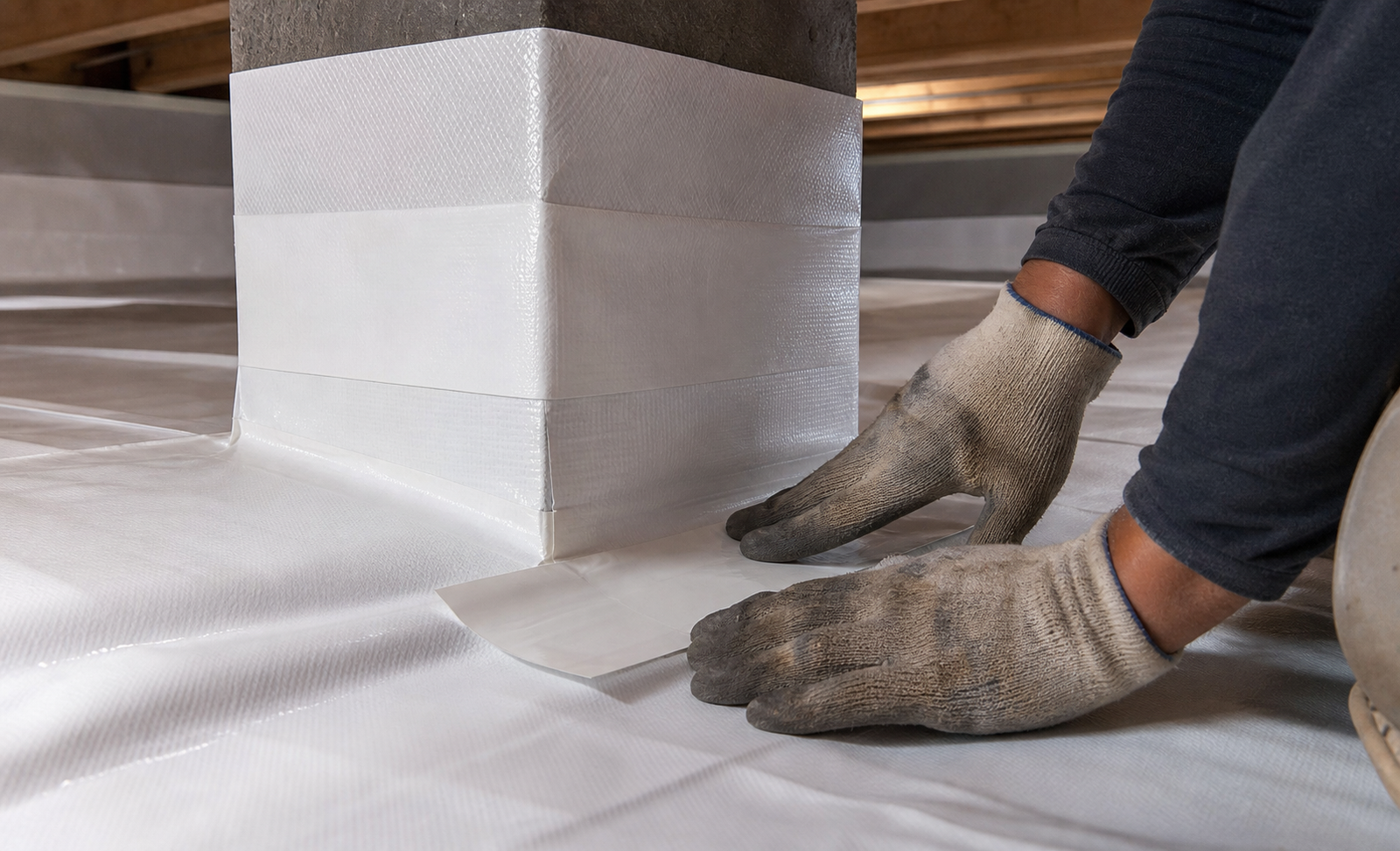
Bare crawl space soil releases water vapor continuously, even when there is no standing water. That vapor rises into cooler framing, subfloor, ducts, and insulation, where it raises wood moisture, feeds mold conditions, and reduces insulation performance.
A thin builder-grade sheet loosely laid on the dirt does little once seams separate and edges lift. The difference between a token liner and a real vapor barrier is in the material weight, the seam sealing, the wall attachment, and how the piers are wrapped.
Catawba Crawlspace Co. installs a reinforced barrier as a continuous surface across the ground and up the foundation walls so the crawl space soil is genuinely covered and the moisture path is closed.
What is included
The liner is only as good as its seams, edges, and attachment.
Catawba Crawlspace Co. installs a heavy, reinforced polyethylene vapor barrier rated for crawl space use, not a light builder sheet that tears and separates.
Seams are overlapped and sealed so the barrier acts as one continuous surface across the entire crawl space floor.
The liner is run up and mechanically attached to the foundation walls so soil vapor cannot bypass the barrier at the perimeter.
Support piers and columns are wrapped and sealed so the barrier stays continuous around every obstruction.
Debris, sharp rock, and old material are cleared and the surface is smoothed so the liner lies flat and resists punctures.
Clean walking paths are kept across the liner so future service visits do not damage the finished barrier.
How the work comes together
A durable vapor barrier depends on preparation, overlap, and attachment far more than on the sheet itself.
The crew reviews soil moisture, grading, pier layout, wall condition, and access so the liner plan fits the crawl space.
Debris and sharp material are removed and the surface is smoothed so the barrier lies flat and resists punctures.
Reinforced liner is rolled out with generous overlaps and the seams are sealed into a continuous surface.
The barrier is run up the foundation walls, mechanically attached, and sealed around every pier and penetration.
The crew shows the homeowner the sealed seams, wall attachment, and access paths before closing out the project.
Built for Charlotte homes
Charlotte-area crawl spaces sit over clay-heavy Piedmont soil that holds and releases moisture through long humid seasons. A reinforced, sealed vapor barrier gives those homes a reliable boundary between damp ground and the wood framing above.
Catawba Crawlspace Co. details the barrier around the real conditions of each crawl space, from pier layout to wall height to access location, so the finished liner stays continuous and serviceable for Gaston and Mecklenburg County homes.
What makes the work easier to trust
What changes afterward
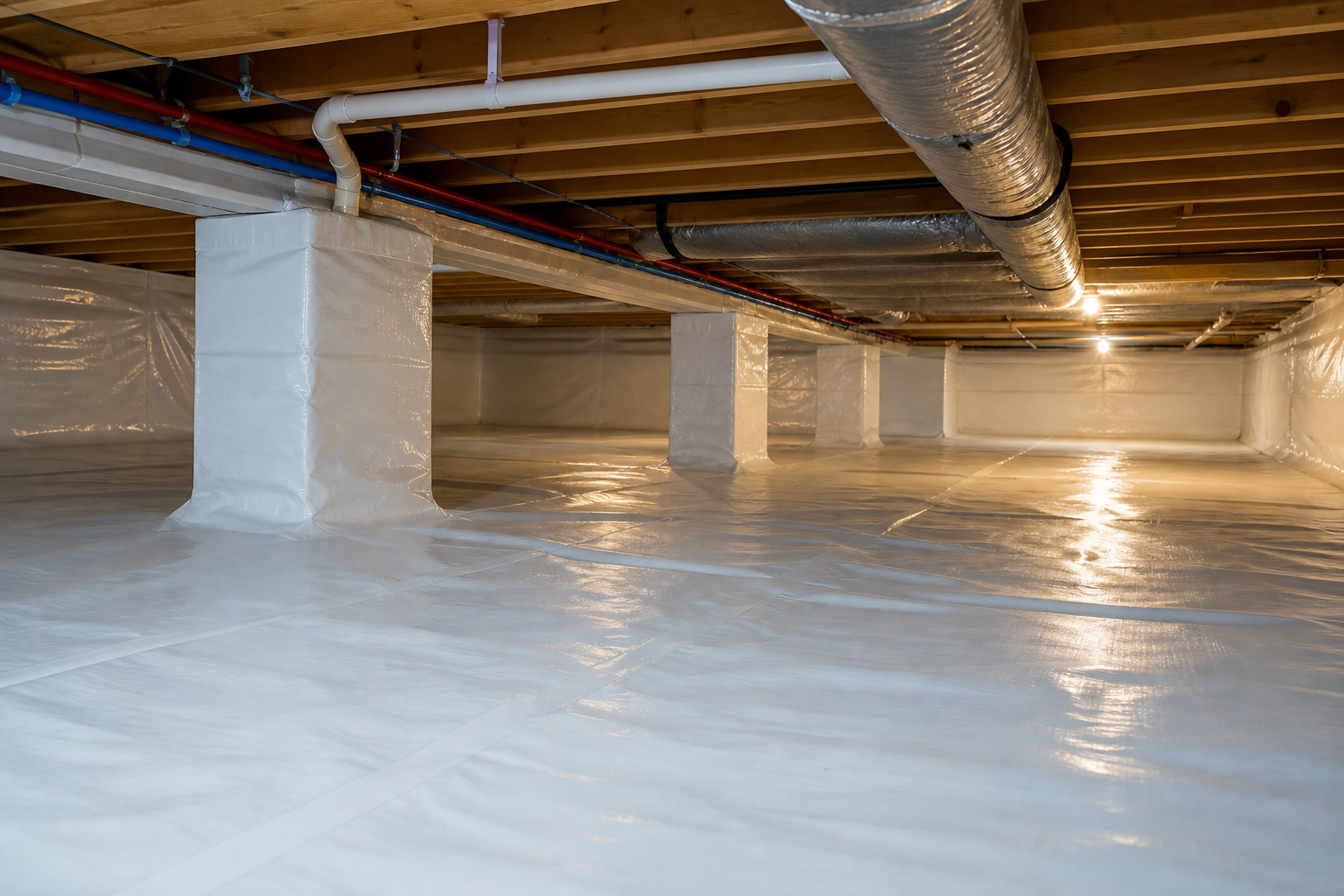
With the barrier in place, exposed soil becomes a clean, covered surface and the main path for ground moisture into the crawl space is closed. Wood framing, ducts, and insulation sit above a controlled floor instead of open dirt.
The finished crawl space is brighter and easier to inspect, which makes the rest of the system, from vent sealing to drainage to a dehumidifier, easier to plan and maintain. Catawba Crawlspace Co. explains how to keep the liner intact over time.
Questions homeowners ask
No. A vapor barrier covers exposed soil, while full encapsulation also seals vents, seams, walls, piers, and access, and adds drainage and humidity control. The vapor barrier is the base layer that the rest of the system is built on.
Catawba Crawlspace Co. installs a heavy, reinforced crawl space liner rather than a thin builder sheet. The reinforced material resists punctures and holds sealed seams, which is what makes the barrier last.
Yes. Unsealed seams separate over time and let ground vapor pass between sheets. Overlapping and sealing the seams is what makes the barrier act as one continuous surface across the whole crawl space.
In most installs the liner is run up the foundation walls and mechanically attached so soil vapor cannot bypass it at the perimeter. Support piers are also wrapped so the barrier stays continuous around every obstruction.
No. Bulk water and seepage are addressed with drainage first, because a liner over active water traps moisture underneath. Catawba Crawlspace Co. reviews drainage before installing the barrier.
A reinforced, properly sealed and attached barrier can last many years when the crawl space stays sealed and service traffic uses the intended paths. Catawba Crawlspace Co. explains how to keep the liner intact over time.
Start here
Catawba Crawlspace Co. will review the soil, piers, and walls, then recommend a reinforced vapor barrier with sealed seams and proper attachment for your Charlotte area home.
Phone: 704-276-6624
Office Address: 3401 Brookshire Blvd, Charlotte, NC 28216