
Water Source Review
Catawba Crawlspace Co. inspects grading, downspouts, foundation walls, and low points to identify where bulk water is entering the crawl space.
Crawl space waterproofing in Charlotte NC
Crawl space waterproofing keeps bulk water out and moves the water that does get in to a controlled exit. Catawba Crawlspace Co. addresses drainage, sump pumps, grading, and foundation seepage for Charlotte homes so the crawl space stays dry after heavy Piedmont rain instead of collecting standing water under the floor.
Why homeowners call
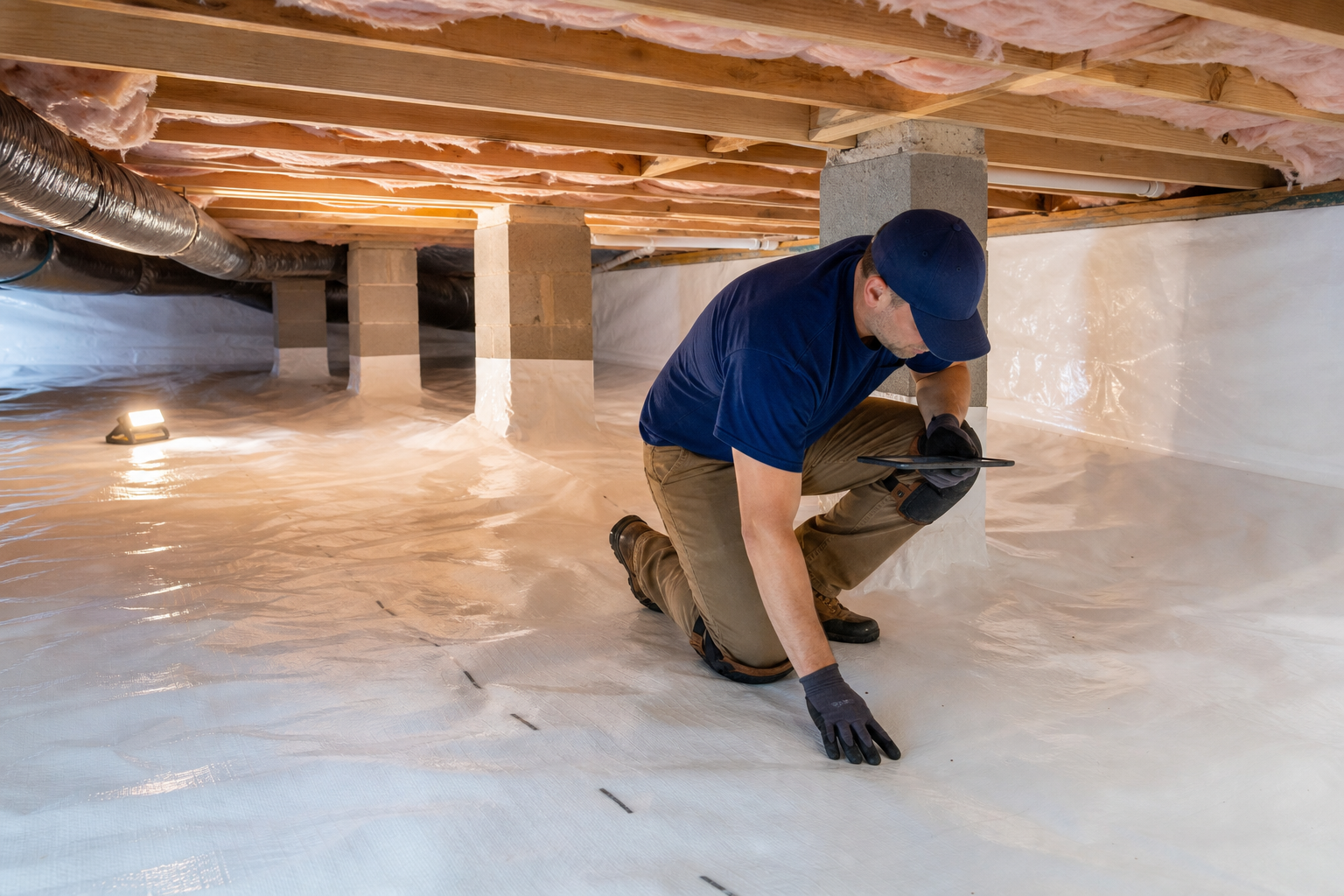
Standing water, damp soil after rain, and water lines on the foundation walls are signs of bulk water entering the crawl space. A vapor barrier alone does not solve this, because the barrier controls ground vapor, not liquid water pushing in from grading, downspouts, or seepage.
In the Charlotte area, clay soil sheds water slowly and heavy summer storms can drive water toward the foundation. If grading, gutters, and drainage are not addressed, water collects under the home and keeps every other moisture-control step fighting uphill.
Catawba Crawlspace Co. traces the water to its source first, then designs interior drainage and, when appropriate, a sump pump so the crawl space has a reliable path to move water out.
What is included
Bulk water is handled at the source and at the low point, not just covered up.
Catawba Crawlspace Co. inspects grading, downspouts, foundation walls, and low points to identify where bulk water is entering the crawl space.
When water enters, an interior perimeter drain can collect it and route it to a sump or suitable exit instead of letting it pool on the soil.
A sump pit and pump are added at the low point where needed so collected water is actively moved out of the crawl space.
The plan includes exterior recommendations, such as downspout extensions and grading fixes, that reduce how much water reaches the foundation.
Waterproofing is coordinated with the liner so drainage and vapor control work as one continuous system.
Foundation wall seepage points are addressed so water has a managed path rather than an open one.
How the work comes together
Durable waterproofing depends on tracing the water source before choosing drainage and pumps.
The crew maps standing water, damp zones, wall staining, grading, and downspout discharge to find where water enters.
Downspout extensions, grading, and surface drainage recommendations reduce the water load before interior work begins.
A perimeter drain or channel collects water that still enters and routes it toward the low point.
A sump pit and pump are installed where needed so collected water is actively discharged away from the foundation.
The vapor barrier is tied into the drainage plan and the system is checked so water has a clear, managed exit.
Built for Charlotte homes
Charlotte, Gaston, and Mecklenburg County homes deal with clay soil that drains slowly and intense seasonal storms that push water toward foundations. Waterproofing gives those crawl spaces a deliberate way to keep bulk water out and move what enters.
Catawba Crawlspace Co. treats drainage and vapor control as one system, so the finished crawl space is protected against both liquid water and ground vapor rather than only one of them.
What makes the work easier to trust
What changes afterward
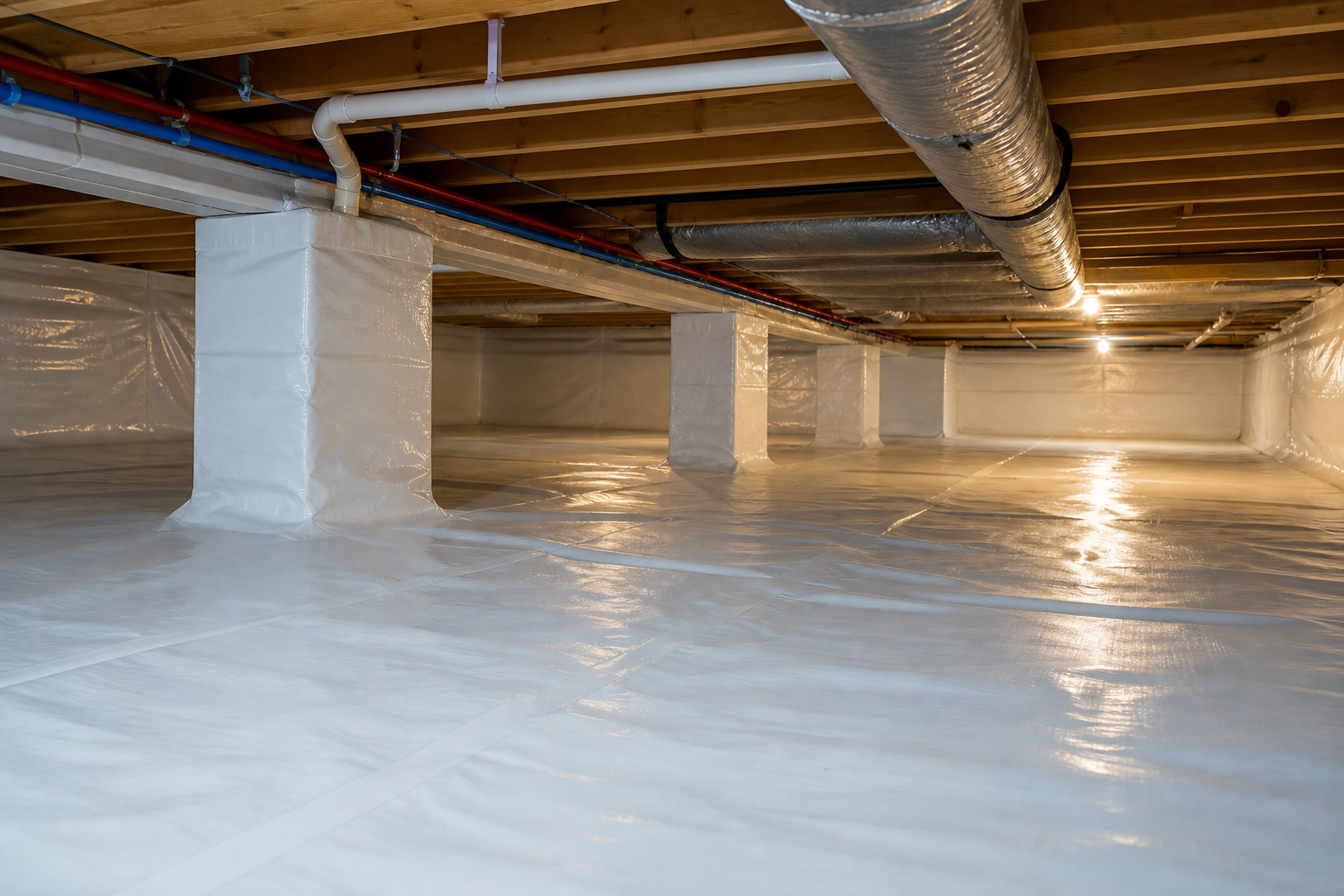
With waterproofing in place, the crawl space has a defined path for water: less reaches the foundation, and what enters is collected and pumped out rather than pooling on the soil. That protects framing, piers, and the vapor barrier.
Homeowners get a crawl space that stays dry through the rainy season and a sump system that is easy to check. Catawba Crawlspace Co. explains what to watch after major storms and how the drainage is meant to perform.
Questions homeowners ask
A vapor barrier controls ground vapor, while waterproofing handles liquid water: drainage, sump pumps, grading, and seepage. A crawl space with standing water needs waterproofing, not just a liner over the top of it.
You need one when water collects and has no gravity exit. Catawba Crawlspace Co. checks whether grading and drainage can move the water first, and adds a sump pit and pump at the low point where active discharge is required.
Usually because grading, downspouts, or foundation seepage direct storm water toward the foundation faster than it can drain. In Charlotte's clay soil, that water lingers. The fix starts by tracing the source, then adding drainage.
Often part of it. Downspout extensions and grading corrections reduce how much water reaches the foundation, and interior drainage handles what still enters. The best plans address both the exterior source and the interior path.
When bulk water is present, yes. Drainage and, where needed, a sump pump are set so the crawl space has a managed exit, then the vapor barrier is tied into that system so the two work together.
It removes a major cause by keeping bulk water out, but persistent odor from damp materials or growth may also need cleaning and humidity control. Catawba Crawlspace Co. reviews all of it as one moisture problem.
Start here
Catawba Crawlspace Co. will trace the water source, then recommend drainage, a sump pump where needed, and grading fixes to keep your Charlotte area crawl space dry.
Phone: 704-276-6624
Office Address: 3401 Brookshire Blvd, Charlotte, NC 28216